Contents
- Endoscopic Deep Plane Facelift: What It Is, Who It Suits
- Endoscopic Facelift Cost: Comparing Azerbaijan, the US, and Europe
- Endoscopic Brow Lift: Complete Guide
- Why Natural-Looking Facelifts Are Becoming the New Standard in 2026
- Endoscopic Deep Plane Facelift & Advanced Facial Rejuvenation
- Modern Plastic Surgery
- Forehead Lift: Youthful Look with Minimal Scarring
- Waist Slimming Surgery Without Rib Removal In Baku
- Scars After a Deep Plane Facelift, Why They Heal So Well
Lower blepharoplasty
What is lower blepharoplasty?
What is lower blepharoplasty? What is upper blepharoplasty? Which is safer? Which costs less? These are the questions patients often ask.
With that in mind, I decided to write a dedicated article on lower blepharoplasty.
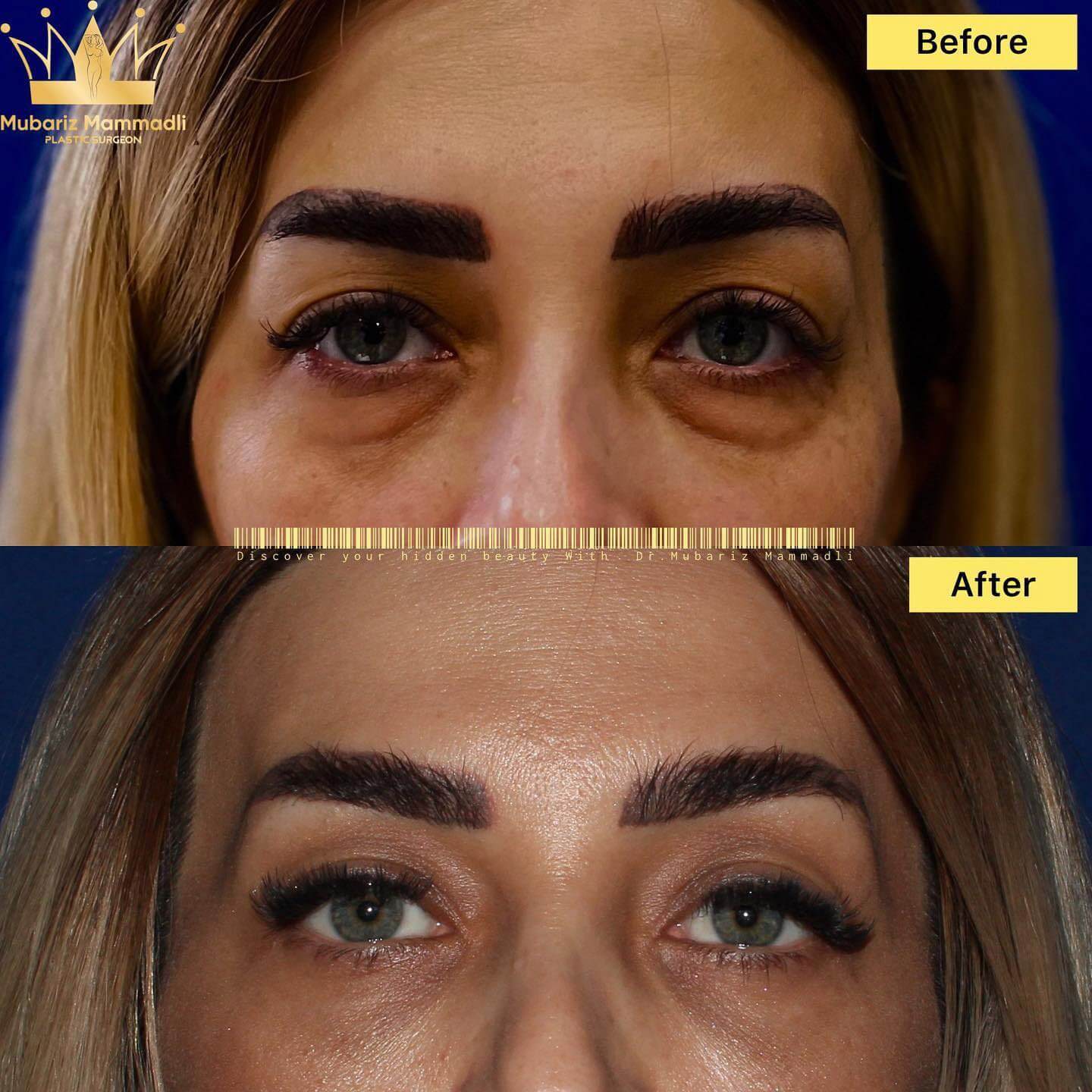
The environment and natural aging affect the delicate skin of the eyelids first. The outer corners of the eyes sag and create bags under the eyes. This gives the face a tired look and makes a person appear older.
The procedure is the plastic surgery technique that addresses all of these concerns.
How lower blepharoplasty is performed
How is the procedure done?
Lower blepharoplasty is performed under local anesthesia. There are two main techniques:
- Classic technique
- Transconjunctival technique
- Classic technique
During a classic eyelid procedure, a small incision is made just below the lash line, running along the natural crease. This gives access to the location of the fat pads and the orbicularis oculi muscle. The surgeon then carefully separates the skin from the muscle and either removes the fat herniation or redistributes it. If needed, excess skin is trimmed away.
At the end of the classic technique, fine cosmetic sutures close the incision. To prevent the lower lid from turning outward after the surgery, canthopexy is often added. The classic technique takes about one hour.
The transconjunctival technique
Transconjunctival technique
The transconjunctival approach is mainly indicated for younger patients with little excess skin on the lower lid. It requires good skin quality, thickness, and elasticity to be a suitable option.
The ideal patient is a young man or woman with persistent under-eye bags or puffiness but no signs of aging.
The advantage of this approach is that no external incision is made. The entry is made through a small incision or puncture in the conjunctiva of the eye. The excess fat tissue is then removed.
Because the mucosa heals very quickly, no sutures are required. The procedure takes about one hour.
Indications and contraindications
Indications
- Visible under-eye bags (fat herniation or fat pads), which can also appear in young people;
- Paraorbital fat excess;
- Periorbital wrinkles;
- Excess skin in the lower eyelid area;
- Deep folds and creases in the lower eyelid and at the eye corners;
- Hollowness in the lower eyelid area.
Contraindications
- High intraocular or blood pressure;
- Diabetes mellitus;
- Thyroid disease;
- Bleeding or clotting disorders;
- Cancerous growths;
- Dry eye syndrome.
Recovery after the procedure
Recovery period
Lower blepharoplasty is considered a light procedure. You can leave the clinic the next day, provided you wear sunglasses.
Stitches are removed after five days, or in rare cases after one week. During recovery, you should avoid physical activity and long hours at the computer. Alcohol and coffee are strictly off limits.
Once the swelling subsides, usually after about ten days, you can apply makeup again.
When the procedure is performed by an experienced plastic surgeon, complications are rare. The final result can only be judged after about six weeks. This is the time needed for full recovery.
After one week, you can confidently appear in public and return to your normal routine.
I, plastic surgeon Mubariz Mammadli, perform the procedure at a professional level in Baku, Azerbaijan. You can contact our clinic to restore your youthful look.