Contents
- Endoscopic Brow Lift in Baku: Before You Travel
- Facial Rejuvenation in Baku: Planning It From Abroad
- Facelift in Baku: Ten-Day Recovery and When to Fly
- Endoscopic Deep Plane Facelift: What It Is, Who It Suits
- Endoscopic Facelift Cost: Comparing Azerbaijan, the US, and Europe
- Endoscopic Brow Lift: Complete Guide
- Why Natural-Looking Facelifts Are Becoming the New Standard in 2026
- Endoscopic Deep Plane Facelift & Advanced Facial Rejuvenation
- Modern Plastic Surgery
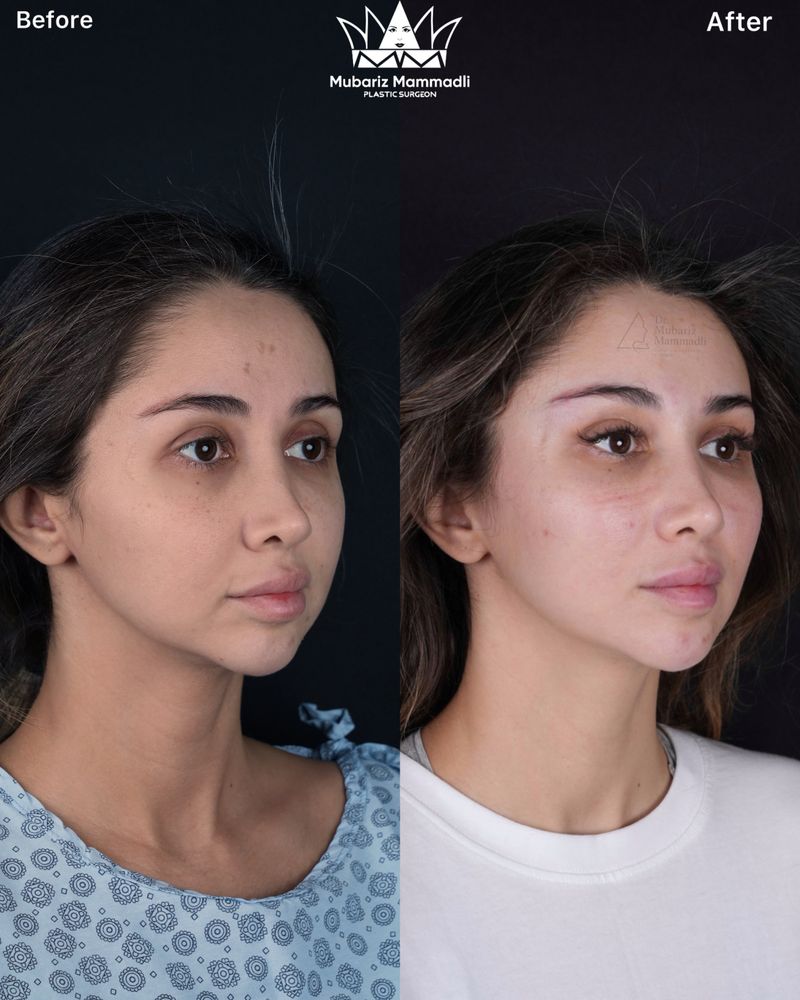
Endoscopic Brow Lift in Baku: What to Know Before You Travel
A brow lift is one of the easier facial operations to plan from another country. It is also one of the easiest to get wrong at the planning stage. The single factor that decides whether the endoscopic technique suits you is something you can check yourself in a mirror.
That factor is your hairline.
This article covers what the operation involves, what a remote assessment can and cannot settle, the risks worth raising before you book a flight, and what realistically fits inside a trip. For the day-by-day of facial surgery recovery in Baku, that is set out separately in facelift in Baku: ten-day recovery and when to fly.
Why the brow is assessed before the eyelid
Many people arrive asking about upper eyelid surgery. They have noticed heaviness above the eye and assume the eyelid is the problem.
Sometimes it is. Often the brow has descended and is crowding the lid from above.
EyeWiki, the American Academy of Ophthalmology reference, puts it directly: where brow descent contributes to the problem, an isolated blepharoplasty may not meet expectations. Removing eyelid skin when the real finding is a low brow produces a technically clean operation and a disappointed patient.
So the order of assessment matters. Brow position first, eyelid second, and often both together. This is the single most useful thing to understand before a consultation.
What a photograph can settle, and what it cannot
Remote planning starts with photographs. The assessment page describes the process: you send photographs with a short note about what you want changed, and you get back an assessment and a plan. A written plan and a price come before any booking, with a video call if the plan needs discussing.
Photographs are good evidence for two things here. Your hairline and hair density, which decide the technique. And the resting position of your brow relative to the orbital rim.
They are weaker evidence for how mobile your forehead is and how firmly the brow is tethered. Judging that properly means lifting the tissue and feeling how it moves.
Treat a remote plan as a well-founded hypothesis that the examination confirms or revises. The general question of which treatment matches which change is covered in the article on choosing the method.
The operation itself
The description below follows the published surgical literature, EyeWiki in particular. Your surgeon's practice may differ in detail, and the details are worth asking about in the video call.
Incisions and where they sit
Five markings are made behind the hairline: one central above the glabella, two paracentral above the lateral brow, and two lateral in the temporal crescents. The supraorbital notch region is marked separately, across roughly 1 to 2 cm, to protect the nerves running through it.
The central incisions go down to bone. The temporal incisions stop at the deep temporalis fascia.
The dissection and the nerves
Dissection is subperiosteal, carried down to the orbital rim. The endoscope is there so the surgeon can see the periosteal release and identify the supraorbital nerve directly rather than working blind.
Near the supraorbital and supratrochlear nerves, blunt-tipped scissors are used in a spreading motion instead of cutting. The temporal dissection stays on the deep temporalis fascia to keep away from the temporal branch of the facial nerve.
The corrugator and procerus are released, which is what improves the lines between the brows. That part is structural rather than temporary, unlike the same effect from injections.
Fixation
Once released, the forehead and scalp are moved upward and fixed in the new position with anchored sutures or dissolvable implants. The incisions are closed with staples or suture.
Fixation is the step that decides whether the lift holds, and it is where techniques genuinely differ. Ask which method is planned for you and why.
Hair and hairline decide the technique
This is the part to check before you do anything else, because it can rule the endoscopic approach out on its own.
The incisions are only hidden if there is hair to hide them in. A thin or receding hairline leaves them less well concealed, and hair can be permanently lost along an incision line.
A high forehead is a separate issue. Moving the scalp backwards on an already long forehead makes it longer, which is why a trichophytic or pre-trichial approach may be recommended instead.
Published guidance also sets limits elsewhere. Severe brow ptosis with significant skin laxity is usually better served by a direct or coronal approach. Limited forehead mobility, from tight anatomy or previous surgery, counts against the endoscopic route. And one threshold treats more than 3 to 4 mm of difference in brow height as a contraindication to the standard approach. Such a difference needs correcting rather than simply lifting.
Photograph your hairline plainly and send it. It is the most decision-relevant image in the set.
Scars, and one claim to be careful about
There are incisions, and incisions heal as scars. What is true is that they sit behind the hairline, so with reasonable hair density they are not visible in normal life, and they become less noticeable as hair grows.
What is not true is that the operation is scar-free. You will see that phrasing used for this procedure, and it overstates. The people most likely to feel misled by it are exactly those with thin or receding hairlines, in whom the incisions are least well concealed.
Your own forehead lift article uses the honest version in its title, minimal scarring, which is the right way to put it. Scar quality also varies between people, so ask to see results in patients whose hairline resembles yours rather than only the best cases.
Risks worth raising before you fly
The sources I could verify describe which complications occur without publishing rates specific to the endoscopic technique, so no percentages are attached here. Ask your surgeon for his own series and the published rates he relies on.
Nerve-related
The supraorbital and supratrochlear nerves run through the operative field. Injury causes numbness or altered sensation across the forehead and scalp, and this is often temporary.
The temporal branch of the facial nerve is the serious one, because injury affects the ability to raise the brow. The dissection plane described above exists to protect it.
Hair and scalp
Hair loss along an incision can occur and can be permanent. Scalp numbness behind the incisions is common early on.
Asymmetry and relapse
Faces are asymmetrical before surgery and remain so after. Where brow height already differs, that difference needs correcting deliberately, and residual asymmetry is a recognised outcome rather than a surprise.
Relapse, meaning descent of the lifted brow over time, is what fixation is meant to prevent. Long-term stability has been examined in a systematic review and meta-analysis, and that literature rather than a clinic estimate is the right basis for any durability figure you are quoted.
Eye-related
Raising the brow changes eyelid closure dynamics. If you already have dry eye, lagophthalmos or exposure keratopathy, say so explicitly, because symptoms can worsen.
Bleeding and infection are the general surgical risks and are described as uncommon. Skin irregularity, folds or residual laxity are also reported.
What fits inside a trip to Baku
What fits comfortably
A brow lift on its own is a modest operation by facial surgery standards, and it fits a single trip.
Combining it with a blepharoplasty is common and usually still fits, but it changes the recovery. Ask for the recovery plan for the actual combination rather than for the brow lift alone.
If a larger facial procedure is also planned, the assessment page sets out a ten-day stay in Baku. Surgery falls on day two or three, the dressing is changed at day five, and clearance to fly comes between day eight and day ten. The more detailed picture is in what an endoscopic deep plane facelift is and who it suits and in endoscopic deep plane facelift and advanced facial rejuvenation.
What needs a second visit
Staged plans need more than one trip by definition. If skin quality work is also recommended, that runs as a course of sessions and cannot be compressed into one visit.
The final brow position is also not something you will see before you fly home, which the next section covers.
Recovery when you are flying home
In the published literature the first post-operative visit falls at about seven to eleven days, when staples are removed. That timing is the single most important thing to build your trip around. It has to happen before you leave, or be arranged elsewhere.
[CLINIC PROTOCOL: insert this clinic's brow lift figures for swelling and bruising, when hair can be washed, when exercise can resume, when patients return to work, and when the final result is expected. These are in the existing brow lift article and on the face surgery page.]
Two expectations hold regardless. Swelling moves downward with gravity, so bruising around the eyes after forehead surgery is normal rather than a complication. And the brow position you see in the first fortnight is not the result, because fixation, swelling and tissue settling keep changing it for months.
One caution on the last point. Different pages across this practice state different intervals for when brow lift results are final, and a patient who reads two of them will notice. It is worth settling on one figure and using it everywhere.
Agree the follow-up arrangement before you fly rather than after. Ask how remote follow-up is handled, what warning signs should prompt immediate contact, and whether a local doctor should be involved for routine checks.
Questions to ask before you book
Ask whether your hairline suits the endoscopic approach, and what the alternative would be if it does not.
Ask which finding the plan is treating: brow position, the lines between the brows, eyelid skin, or some combination.
Ask what fixation method is planned and why that one.
Ask what happens if the examination disagrees with the photographs, and what that would change about the price. A written plan and a price arrive before booking, so this is a fair question to put in advance.
Ask to see the results gallery and read the credentials yourself on the about page. The face surgery page lists the full range of facial procedures.
Frequently asked questions
Can you tell from photographs whether I am suitable?
Largely, for this particular operation. Hairline and hair density photograph well and they are what decides the technique. Forehead mobility and how firmly the brow is tethered need an examination. So a remote plan for a brow lift is more reliable than for most facial surgery, but it is still confirmed in person.
Is an endoscopic brow lift scar-free?
No. There are small incisions behind the hairline and they heal as scars. The accurate claim is that they are concealed in hair and not visible in normal life, which is different from their not existing. With a thin or receding hairline they are less well hidden.
Will it fix my hooded upper eyelids?
Sometimes partly, sometimes not at all. If a descended brow is crowding the lid, lifting the brow helps. If the problem is excess eyelid skin itself, blepharoplasty is the operation, and the two are often assessed together rather than one instead of the other.
How many days do I need in Baku?
A brow lift alone needs less time than a full facial procedure. The assessment page describes a ten-day stay for facial surgery, with the operation on day two or three and clearance to fly between day eight and ten. Ask for the timing of your specific plan, since the first post-operative visit has to fall inside the trip.
Will my brows look surprised?
That appearance comes from over-elevation and from lifting the wrong part of the brow, not from the technique. Male and female brows have different natural shapes and positions, and the plan should state where your brow is going rather than simply that it is going up.
How long does it last?
The release and the muscle work do not reverse, and fixation is designed to hold the new position while it heals. Ageing continues from the new starting point. Long-term stability has been studied specifically, and that literature is the right basis for any number you are quoted.
Who looks after me once I am home?
Agree this before you fly. Ask how follow-up is handled remotely, which warning signs mean immediate contact, and whether a local doctor should do routine checks. Distance makes aftercare a logistics question as much as a clinical one.
Starting a remote assessment
Dr. Mübariz Məmmədli is a plastic, aesthetic and reconstructive surgeon.
To begin, send photographs through the contact page, including a plain, well-lit image of your hairline. On the international site, the brow lift service page and the deep plane and endoscopic facelift guide cover the wider surgical context.
Outcomes, recovery and risks vary between patients. The technical descriptions above follow the published surgical literature and are not a guarantee of any individual result. Any treatment decision should follow an individual examination and a full discussion of the alternatives, including the option of doing nothing. If you take prescribed medication, do not stop it or change the dose on your own before surgery. Discuss it with the doctor who prescribed it and with the team that will treat you.