 FACELIFT
There is a reason why Facelift Surgery is one of the most sought-after facial surgeries procedures. Our face is the image we present to the world and determines how we look in many ways. As we age, wrinkles form on once-smooth facial skin and previously firm skin begins to sag. A facelift eliminates sagging and wrinkles, giving patients of any age a younger, more refreshed appearance.
Preparation for Facelift Surgery
The patient undergoes all necessary examinations before surgery, including blood and urine tests, an ECG, and a chest X-ray. Blood is screened for infectious and viral diseases, and clotting levels and Rh factor are determined. The patient must inform the doctor of all medications taken and completely stop blood-thinning medications two weeks before surgery. The patient has additional consultations with the anesthesiologist. The goals of the procedure and desired results are discussed with the patient.
Duration of the procedure: 2-3 hours;
Anesthesia: local anesthesia or general anesthesia;
The types of facelift are as follows:
- full facelift;
- lifting the upper third of the face (forehead lift, brow lift);
- lower facelift (complete jaw reduction, neck lift);
In aesthetic plastic surgery, the facelift is considered the most difficult yet delicate procedure.
The procedure consists of several stages:
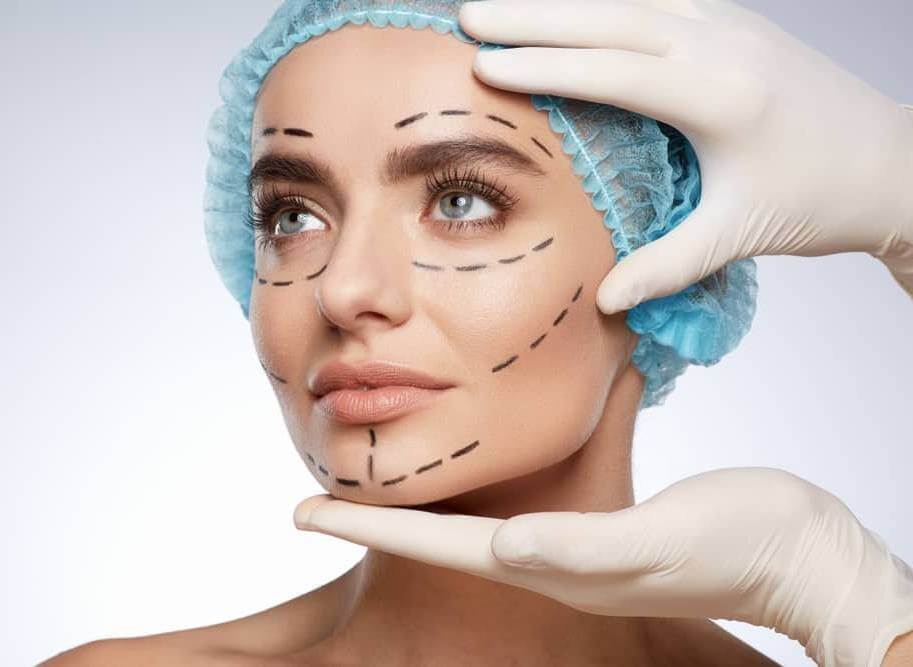
- The surgical area is marked in advance;
- incisions are made along the hairline with a scalpel;
- using special instruments, the tissue separation process is performed.
- The SMAS layer is released, lifted, and sutured.
- starting from inside the ear, excess skin is identified and removed;
- wound edges are carefully joined and layered sutures are placed;
- drainage is placed;
- at the end of the procedure, a special corset is applied to the patient's face and they are transferred to the ward.
Post-Operative Period
After the procedure, the patient stays in the hospital for one day to prevent discomfort. It is normal to have swelling that gradually increases during the first five days and then gradually decreases. Bruising may appear one week after surgery. They will resolve on their own without any treatment. Cosmetics can be used after three weeks. The patient will see the final result only after four to six months.
The neck plays an important role in maintaining a youthful facial appearance. With aging, the skin and muscles of the neck loosen and excess fat accumulates in some individuals. Through platysmaplasty, a small incision is made under the chin or behind the ear to access the platysma muscle and neck fat tissue. This eliminates neck muscle sagging and removes excess fat.
Signs of aging are often visible in the forehead and eyebrow area. In these areas, sagging, brow drooping, eyelid drooping, forehead wrinkles, and brow crease marks can occur. In brow lift surgery, the structures causing these problems are tightened or the forehead softness is altered, the brows are lifted upward, and brow crease marks are refined. A brow lift can be performed alone or in combination with a facelift or eyelid surgery.
Recent advances in brow lift surgery, including endoscopy, allow procedures to be performed with different approaches. A brow lift is individualized for each patient. Depending on your needs, your surgeon may choose from several surgical incision techniques. Brow lifting does not stop the aging process. Treatment options include brow lift surgery and addressing sagging in the upper forehead area. Improvement of skin laxity and lines can be achieved through surgical intervention or other treatment methods. Risks or possible complications are associated with different forms of treatment or surgical technique.
Risks of Brow Lift Surgery:
Every surgical procedure carries a certain degree of risk. Understanding the risks of brow lift surgery is important. A person's choice of surgical approach is based on a comparison of risks and postoperative changes. Although most patients do not experience the complications discussed below, discuss with your plastic surgeon; it is important to fully understand the risks, potential complications, and outcomes.
Bleeding: Although rare, bleeding problems may occur during or after surgery. If bleeding occurs after surgery, emergency drainage treatment or blood transfusion may be required. Aspirin or anti-inflammatory medications should be stopped beforehand as they increase the risk of bleeding ten days after surgery. Blood pressure not under medical control may cause bleeding during or after surgery. Bleeding under the skin can delay healing or cause poor scarring.
Infection: Infection is not expected in most cases after this procedure. In rare cases, if infection develops, additional antibiotic treatment or surgical intervention may be required.
Skin Sensitivity Changes: Decreased or lost skin sensitivity may occur on the face and scalp after brow lift surgery. This may resolve over time. Chronic itching may occur on the scalp and brows after forehead lifting and brow elevation..
Skin Line Irregularities: After a brow lift, irregularities, lines, depressions, and wrinkles may appear on the skin.
Poor Scarring: Although good wound healing is expected after surgical intervention, abnormal scarring may form in the skin and deeper tissues. These scars differ from the surrounding skin and may not look pleasant. There is a chance that sutures will leave visible marks. Additional treatment may be required.
Changes in Surgical Approach for Brow Lifting:
In some cases, your surgeon may be forced to make changes to the surgical technique during the brow lift procedure, depending solely on factors discovered during surgery. This may involve switching from an endoscopic (closed) procedure to a standard (open) brow lift procedure.
Nerve Damage: During brow lift and forehead lift surgery, there is a risk of damage to both motor and sensory nerves. Loss or weakness in brow or forehead movements may occur after surgery. Many people see motor function return. Permanent weakness is rare. Damage may occur to the forehead, scalp, and temporal nerves. Decreased sensation (numbness) may occur on the scalp after brow lift surgery. Permanent numbness or painful nerve marks are rare.
Damage to Deeper Tissues: After surgery, deeper tissues such as the eyes, blood vessels, skull bones, muscles, and nerves may also be damaged. The potential for this varies by type. These injuries may be temporary or permanent.
Asymmetry: The normal human face is asymmetric. After brow lift surgery, there may be a difference between the two sides.
Surgical Anesthesia: Both local and general anesthesia carry risks. Any type of surgical anesthesia or sedation carries the risk of complications, injury, and even death.
Allergic Reactions: In rare cases, local allergies to the plaster, suture materials, or topical medications used have been reported. More serious systemic reactions may occur with medications used during or after surgery. Allergic reactions may require additional treatment.
Delayed Healing: Wound separation or delayed healing is possible. Some areas of the scalp and brow may heal abnormally and slowly. Some areas of skin may die. Frequent dressing changes may be required, or surgical removal of non-healing tissue may be needed. Smokers have a higher risk of skin loss and delayed wound healing.
Seroma: Fluid accumulation may rarely occur under the skin. If this problem occurs, procedures to drain the fluid may be required.
Long-Term Effects: Changes in the appearance of the brows and forehead may occur due to aging, sun exposure, weight gain or loss, and other conditions unrelated to the brow lift procedure. A brow lift neither stops aging nor permanently maintains brow area tension. Future surgeries and treatments may be needed to maintain the results of a brow lift.
Eye Irritation: After brow lift surgery, or if the patient has also undergone eyelid surgery, dry eye or irritation may occur.
Pain: In very rare cases, chronic pain may occur after brow lift surgery.
Hair Loss: Hair loss may occur along the surgical incision or on the scalp. It is not possible to predict whether this will happen. Hair loss may gradually recover or, in rare cases, may be permanent.
Metal Materials and Deep Sutures: In some surgical techniques, small staples or permanent deep sutures are used to support the forehead structures. In very rare cases, a screw may penetrate the skull bone. Intraparenchymal injury is rare but possible. If this occurs, additional treatments may be required. Over time, removal of deep sutures or metal material may be necessary.
Eyelid Conditions: Conditions affecting eyelid function, such as insufficient drooping between the eyelid and eye area (ectropion) or upper eyelid sagging (ptosis), may occur simultaneously with drooping of the forehead and brow structures. A brow lift will not correct these problems. Additional surgical interventions may be required.
Unsatisfactory Results: There is a possibility that brow lift surgery will not produce good results. This carries risks such as unacceptable deformities, loss of function, wound deterioration, and sensory loss. The outcome of the surgery may disappoint you. In rare cases, additional surgery may be required for better results.
Need for Additional Surgery: In addition to risks and potential surgical complications, there are many factors that may affect the outcome of brow lift surgery. Although risks and complications are not common, those associated with brow lift surgery are listed here. Other risks and complications occur less frequently. If complications develop, additional surgery or treatment may be required. While good results can be expected, there is no guarantee.
One of the most commonly performed procedures is the midface lift. This area, which is the focal point of the face, shows earlier signs of aging because it is prone to aging. The midface lift is performed on female patients aged 30 to 55. In cases such as cheek sagging, under-eye bag formation, and weak cheekbones, this procedure is performed to give the midface a voluminous and youthful appearance.
In endoscopic forehead lift procedures, a more youthful and dynamic appearance is achieved by tightening the upper part of the face. During forehead surgery, the forehead and temple areas are stretched and the brows are lifted when necessary. The endoscopic forehead lift, which holds an important place in modern aesthetic surgery, leaves less scarring than the classic forehead lift and the healing process progresses more quickly.
Canthoplasty, known in medical terms as almond eye surgery, is a procedure performed to eliminate sagging around the eyes. In this process, the eyes are tilted and opened more. Thus, with a minor intervention, you can eliminate this problem that appears with aging and bothers you. Note that this procedure is applied not only to women but also to men.
The foundation of this application is to reposition and tighten the facial muscles and tissues of the forehead, brows, temples, midface, and mouth corners to their natural positions using an endoscopic method (through small incisions made in the scalp). The procedure may be accompanied by eyelid surgery and/or fat injection. The results of endoscopic full facelift surgery are long-lasting and delay aging.
Everyone wants to look younger with a facelift, but no one wants it to be known that they had a facelift procedure. This can be achieved using the SMAS method. With this technique, a "plastic" expression does not appear on the face. SMAS is a significant layer that covers the important muscles of the face and neck. During a facelift, not only the skin but also this layer is extended as a separate layer, giving the face a more natural appearance.
In facial rejuvenation procedures, the surgical application called "deep plane" belongs to the layer beneath the SMAS. At this level, during surgery, we can mobilize and restore the form of not only the patient's skin but also all the soft tissue mass that has loosened and sagged due to aging and gravity.
This technique, a more advanced form of the SMAS Face Lift that preserves a more natural expression rather than a plastic surgery effect, can lift the entire face together with the middle surface. This also eliminates deformities in the lower and middle parts of the face. High-SMAS Facelift is a procedure that takes 3 to 5 hours.
Today, facelift procedures are being minimized and applied to specific areas. Instead of performing surgery on the entire face, the mini facelift technique allows for fewer incisions and a faster healing process. This procedure is performed only on the lower face, cheek area, and under the chin. It is more appropriate to perform this application at an early age (40 to 50) before signs of aging and sagging in different parts of the face reach an advanced level.
The Ponytail Lift procedure is very similar to the endoscopic midface lift, but its scope is somewhat limited. For this reason, excessive or long-term swelling seen in endoscopic midface lifts occurs in smaller amounts and for a shorter duration in this procedure. As a result, the upper face and forehead area are tightened, giving the face a taut, full, and youthful appearance.
Blepharoplasty is a surgical intervention that rejuvenates the eyes and gives them a long-term healthy and meaningful expression. Aesthetic surgery of the lower and upper eyelids involves the removal of excess skin and fat tissue from the lower and upper areas of the eyelids.
Blepharoplasty is a surgical procedure in which excess skin and muscles are removed from both the upper and lower eyelids, along with the underlying fat tissue. Blepharoplasty restores the shape of sagging skin. This surgery helps improve vision in elderly patients with drooping upper eyelids. Blepharoplasty varies depending on each patient's specific needs.
A surgical intervention called canthopexy is performed to correct the upper and lower eyelids and change the shape of the eyes. The canthopexy procedure, which serves purposes such as removing "bags" under the eyes, lifting the eyelids, and eliminating the effects of injuries, can be performed at any age starting from 18.
Almond eye surgery, which is very popular today, eliminates the tired expression in the eyes, which is the focal point of the face, and gives a younger and more attractive appearance. With this surgery, the outer corners of the eyes are slightly lifted, allowing the eyes to gain a larger and deeper expression, and thus people can have a more attractive and stable eye shape.
Tilted eyes, called cat eyes, give a fresher and more attractive appearance, and at the same time are one of the applications that lift the face against gravity. To give the eyes a cat eye expression, the corner of the eye only needs to be slightly lifted with a small incision, and this procedure is called cat eye surgery.
Eyelid health is very important from both aesthetic and functional perspectives. It plays a major role in protecting the eyelid from external factors and maintaining its health. In medical literature, drooping of the eyelid is defined as ptosis. Since it is not a systemic disease, the only treatment for ptosis is surgery.
During this procedure, sagging of the lower eyelid is corrected. Lower blepharoplasty, which is an incisionless procedure, is a procedure that patients are more inclined to seek because it is painless.
With lip surgery, the lips are reshaped and gain volume and moisture at the same time. For this, dermal fillers or fat tissue transfer methods are used.
Known as "Lip Lift," also referred to as upper lip lift and upper lip shortening, this procedure is applied to people who are not satisfied with the length of the upper lip area. In this case, the distance between the lip and nose, which disrupts the patient's facial proportions, is shortened.
With Botox, wrinkles and lines on the skin temporarily disappear. Almost everyone can use Botox, except for pregnant or breastfeeding women. The very quick Botox treatment can be used to reduce wrinkles around the eyes, on the forehead, and on the neck, to lift the brows, and to prevent sweating. No pain is felt after the procedure. Patients can return to their normal work life immediately after application.
One of the methods that can be used to provide facial volume is fat and tissue injection. The cheeks, forehead, nasolabial fold, lips, chin tip, and other sunken areas can be cited as areas where this application is performed. Typically, fat taken from the patient undergoes special processes such as washing and filtering, is then brought to a certain concentration with thin tubes, and is injected into the required area.
Reconstructive surgeries that serve to eliminate deformities such as irregularities, depressions, and sagging in the facial area are the most widely performed plastic surgeries. These surgeries can be performed individually or in combination.
The nose is a very important organ in terms of appearance and breathing. For this reason, nose interventions must be carefully planned and performed from every aspect. With aesthetic nose surgery, the size of the nose can be reduced, the tip reshaped, the nostrils narrowed or widened, and the angle between the upper lip and nose changed. This surgery is used to eliminate problems such as congenital defects, nose injuries, and certain respiratory diseases.
Ethnic Rhinoplasty is the art of creating a natural aesthetic nose with features related to the race to which people belong (African, Middle Eastern, Latin American, Asian, and Hispanic). With various surgical techniques, the desired shape is achieved by correcting the pathologies in the nose.
Septorhinoplasty is the correction of the deviation in the middle part of the nose along with its external appearance in the same procedure. In addition to deformities in the nose shape, problems that disrupt the breathing rhythm are also eliminated.
Due to aging, many deformities begin to appear on our face, especially around our eyes. Today, effective treatments that can be performed in a clinical setting are available for deformities such as under-eye bags, subdermal flow due to fat pad rupture, eyelid sagging, and brow sagging. Accutite, one of the latest technologies without surgery, is an effective method for correcting eyelid sagging, brow lifting, addressing under-eye bags, and reducing fat tissue in the facial area.